Manaiakalani Secondary Teacher’s Summit

One of the key benefits of being present at the Manaiakalani Wānanga held in Auckland each year, is the opportunity to network and collaborate kanohi ki te kanohi or face to face.   With over 100 participants in attendance, it’s the ideal place to share practice, brainstorm ideas and discover what’s on top for our teachers.   Inspired by the presentations and conversations with like-minded colleagues, it’s the perfect environment for hatching a plan, so over a few canapes and refreshments it became a recurring theme that there was strong interest for a professional development event specifically geared towards our secondary school teachers.

Our secondary colleagues were keen to spend some time together over a day to discuss issues that spoke directly to NCEA, how to enhance teacher practice, and the unique challenges of the high school classroom.   There was a surge of interest in learning more about  AI tools like Gemini, Canvas and NotebookLM.

Google HQ hosted us and it was a fabulous day.  Special thanks to Steve Smith, the NZ Education Manager and our Manaiakalani Facilitation team, who supported our teachers to move beyond theory and into the practical world of AI. Together, we built curated agents grounded in our Learn, Create, Share pedagogy, specifically aligned to the New Zealand Curriculum and NCEA standards.

As I looked around the room at Google HQ, I didn’t just see teachers learning about ‘tools’—I saw them reclaiming time, collaborating with peers, and rediscovering creative ways to support their students. For an inaugural summit, the energy was exactly what we’d hoped for: a collective of educators inspired by new possibilities for teaching and learning. We set out to create a space for secondary teachers to connect, and this was the perfect start to this journey

Check out our photos and feedback from the day on our Secondary Support site. 

Why encourage students to create Infographics

In today’s world, when we ask students to show what they know, they can do so in a variety of ways. Many of the senior assessments, allow students to submit evidence in a variety of ways for example as a presentation, an infographic, a video, a voice recording, or even an animation. With so many diverse Create opportunities available, it’s worth asking: how often are we deliberately supporting students in class to be creative, so they have the digital competency to bring their ideas together using more visual modes?

Too often, students revert to creating a slideshow filled with pictures and large amounts of text. Similarly, we can fall into the habit of relying on worksheets that prioritise recall over understanding. How can we move away from this and instead offer tasks that ask students to apply a more critical lens to their learning? Creating infographics offers a different — and powerful — way for students to demonstrate their understanding.

An infographic asks students to make decisions. They must decide what information matters most, how ideas connect, and how to communicate those ideas clearly to someone else. This shifts learning from simply consuming information to actively shaping meaning.

Infographics make thinking visible

At their core, infographics are about clarity. Students cannot include everything, so they must identify key ideas, patterns, and relationships. This naturally pushes them to ask important questions:

  • What is the main message I’m trying to communicate?
  • Which data best supports that message?
  • How can I show cause and effect clearly?

In science, showing how warmer air leads to heavier rainfall and increased flooding because of climate change could be represented visually using photos, statistical data or quotes from climate scientists. In social sciences, it might involve explaining migration patterns or economic pressures. In both cases, students are engaging in cause-and-effect thinking, rather than simply listing facts.

They build data literacy, not just design skills

There’s a common misconception that infographics are about “making things look pretty”. In reality, good infographics are grounded in data literacy. Students need to:

  • Select appropriate data
  • Decide how to represent it (numbers, icons, charts, comparisons)
  • Interpret what the data actually shows

Through this process, students begin to understand that data is not neutral — it tells a story depending on how it is selected and presented. Learning to question and justify those choices is a critical skill, particularly in a world saturated with fake media, sensational headlines, and questionable statistics.

Infographics are especially powerful because they allow students to communicate understanding in multiple ways. A student who struggles with long-form writing may excel at organising information visually. Another may use short, precise language supported by diagrams or icons.

Purposeful use of digital tools

Many of us are familiar with Google Slides, but it’s worth taking a closer look at the Building Blocks found under the Insert menu. These ready-made templates make it easy to add stylised headings, key statistics, and text callouts. When combined with images, diagrams, and graphs, Slides becomes an ideal tool for creating infographics.

Through this process, students learn that digital features are not just decorative. Shapes, icons, diagrams, and colour all have a purpose. Rather than asking “What looks good?”, students begin asking:

  • Does this visual make my idea clearer?
  • Does this colour highlight something important?
  • Can someone understand this without me explaining it?

These are transferable design and communication skills that extend well beyond the classroom.

Infographics connect learning to the real world

Outside of school, infographics are everywhere — in news articles, social media, government reports, and scientific communication. Teaching students how to create them helps bridge the gap between classroom learning and real-world contexts.

When students create an infographic about climate change, flooding, or migration, they are not just completing an assignment. They are practising how to inform, explain, and persuade — skills that matter far beyond assessment.

If you’d like to learn more about how to put this together for yourself or your students I’ll be running an online Manaiakalani toolkit on Thursday the 12th of March at 3:30 pm.  Registrations open soon via the Manaiakalani Toolkit site, click here to access.  

Term 1 online toolkits

My toolkit offering this term was looking at Google Class site design for secondary school teachers.  I find one of the important considerations when developing a class site is taking into account teacher’s workflow.   It’s not unusual for high school teachers to teach more than one subject area.  For that reason, I recommend teachers (who are new to class sites), use one site for all their classes.  Use top level pages for each class or year level and subpages for all the content thereafter.

An introduction to yourself and quick links from the homepage makes for a great landing page.  Ideally, your homepage is an ever-changing space that shows what is currently being taught, and relevant notices.
Ensuring everything within the site is visible is easily established with a class site folder and the permissions set to ‘anyone with the link can view’.  Then it’s only a matter of moving files into that folder or using Google Drive shortcuts (Shift + Z).  Organising your files in this way will save you time in the long run and, you won’t have emails from people requesting access to your resources.

Aside from your class site, the other valuable component for making teaching visible is Hapara Teacher Dashboard.  Many teachers like to use Hapara workspaces for setting assignments and work.  The key thing to remember here is to publish your Hapara workspace then grab the URL link and add it to your class site.  Now you have an efficient one stop learning hub in your class site.

The recording from my toolkit Secondary School Class Site Design, goes into the ideal set up in more detail.

The promise of a new school year

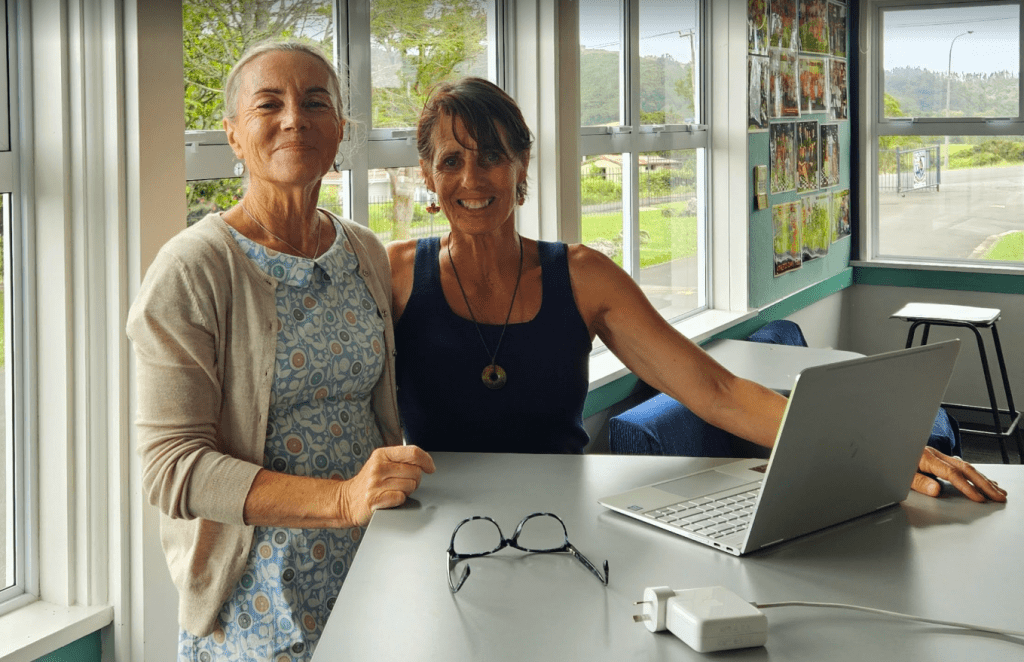
There’s nothing better than the start of a new school year for me.  It’s a chance to initiate some fresh ideas and be inspired.  Inspiration can come from a variety of sources, often from those I work alongside like my dear friend Ria.

Ria has been a friend of mine for over 25 years.  Our kids were toddlers together, and as we were close neighbours, they got to play together frequently.

Ria has been a teacher for over 30 years, she’s one of the best.  Highly creative in her approach and passionate about her causes.  A stand out example for me was how she motivated a group of Kerikeri High School students to form a team. They called themselves the RAG (Recycling Action Group).  This was an after school project, where students gathered up all the rubbish around the school and over the course of a few weeks they build an art sculpture utilising the collected rubbish, in the middle of the school thoroughfare.  Nobody announced what was happening, but as the sculpture grew and grew, students became curious about this new formation taking place in the school grounds.  Students across the school were quite shocked to see how much rubbish was accumulated throughout the school day.  It prompted some changes to how students dispose of rubbish and what items are non-recyclable.  The RAG group made short educational films to inform people about the impact rubbish has on the environment.   This was largely a student led project.

Ria’s most recent and highly significant achievement was receiving her Doctorate last year.  Her research and thesis drew attention to the lack of educational focus and resources around the teaching of climate change particularly in high schools.

In Ria’s presentation Climate Change Education, (see below) she highlighted how empowering it would be “if every student left high school with an understanding of mitigation (reducing greenhouse gas emissions) adaptation (preparing for the predictable impacts of climate change) and an eye of innovation in the face of climate change.”

Ria poses the question, “How can secondary educators better engage students with sustainability education?”

I’m interested in hearing from teachers within the Manaiakalani network who would like the opportunity to collaborate on something that is meaningful for our students and builds their knowledge base on how they can get engaged in response to climate change.  Leave me a comment or get in touch via email: kerry.boyde-preece@manaiakalani.org

Climate Change Education, Dr Ria Bright from nzaee on Vimeo.

Online Publishing site

Everyone has a book inside them just waiting for the right time to be written down.  If you’ve contemplated the idea of creating your own publication, but never thought it would make it past a publishers eye Yudu.com.  could be the anwser to your prayers.   To use the Yudu’s online publishing tool simply create a free account and upload your files, Google Slides, PDF, Word(.doc), Powerpoint(.ppt), Excel or Open Office equivalents.  You will need to upload your document in it’s entirety, with all your pages in their correct order.    Keep fonts simple in your documents or you may have some display issues.  If you really want to use fancy fonts, save them as an image.  As a general rule of thumb it’s best to keep to the ” web font family’.  Choose the type of publications you want to make, then save to your library.   You’re then ready to share with others either by a direct email link, embed into your web site or make your publication public and save to Yudu’s library.

When you’re ready for an upgrade you’ll want to take advantage of Yudu’s Plus which gives you the added features of being able to embed video into your books, add audio, edit pages and sell your publication.

Yudu’s library is extensive with thousands of e-books and magazines and all kinds of subjects.  While viewing publications you can also add your own bookmarks, highlight text and add a small note by simply dragging the notepad onto the publication.  You can also save your favourites to your library.  Roll your mouse over the tools when viewing to see how you can share this document, download or print.

The stories we tell ourselves

I recently attended the PPTA Te Wehengarua Education Conference 2023 which was held in Tāmaki Makaurau, Auckland.  It was exciting to be amongst educators from across New Zealand and Australia to share ideas and best practice.  The speakers were fabulous and not just from the education sector.

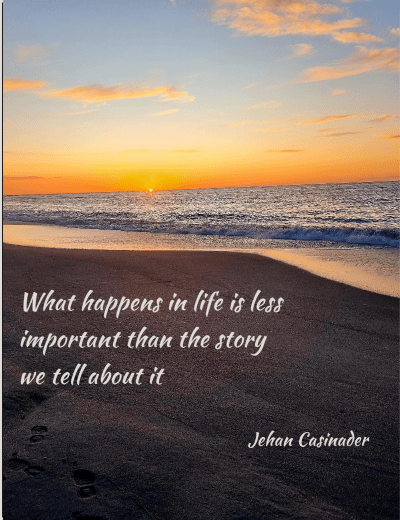
Jehan Casinader, an award winning journalist and mental health advocate spoke about how the stories we tell ourselves shape our future.  There are a significant number of New Zealand children growing up in difficult circumstances who lack a positive healthy and hopeful story upon which to build their life.   His book This Is Not How It Ends: How Rewriting Your Story Can Save Your Life was written while he was navigating his own way out of depression.  Through that period, Jehan came to the understanding that  “what happens in life is less important than the story we tell about it” and that the stories we tell ourselves can always be changed.  He suggested it’s about switching the story from what’s wrong with you to what’s happened to you.  From there, how could you tell a different story using the same facts? 

Our interpretation of what actually happened may not be true, perhaps there were elements missing that we weren’t aware of like the influence from other people on us.  He posed another question, who’s writing your story?  Are we truly in charge of our narrative or have we handed that authority over to someone else?  Remembering that we have within us the power to change our stories, and rewrite a positive narrative can help us to take back some power.

Encouraging young people to question the stories they tell themselves by asking “If your life was a Hollywood movie, what character would you be playing in your life right now?”, can be a starting a point for more conversation and understanding.

Through the process of changing the story we can find hope, we can find a new direction, we can find peace within ourselves.  A good story is one in which the main character comes out a better, richer and more whole person.


A rich learning experience for all

Teacher only day

The school year has got off to a great start at Bay of Islands College with a teacher only day.  This was a chance to reconnect with familiar faces and new members joining the teaching staff.

Led by Ruth Hills, teachers were introduced to the school’s professional development team which included Nyree King, Susan Arrowsmith, Patsy Wynyard and myself.  Collectively we’ll be working to ensure their professional learning is cohesive and aligns with their chosen inquiry.

We began with Ruth revisiting some excellent and simple teaching strategies that teachers can use with their own students.  Great icebreaker activities that demonstrated how sharing circles can foster a safe learning environment and help to build trusting relationships with students.

We also used a sharing circle with Nyree as she unpacked the ‘Why’ behind the NZ Curriculum Refresh.  I was really taken with the power of authentic sharing in this exercise. We were asked to reflect and share something from our own education. I was taken quite by surprise as I became a little emotional reflecting on my childhood experience and the separation of my parents during my school years.   Who would have thought that I could have such a response so many years later.  Many of us commented on the impact our schooling had and how we were determined to do whatever we could to make sure our students had a positive experience.

Last year, I attended the 1st PPTA Te Wehengarua National Secondary Education Leadership Conference and it was there that I heard Hana O’Regan from Core Education talk about the history of New Zealand’s education system. Her presentation Inequity by design was recorded and is an excellent watch.  So inspiring and motivating.

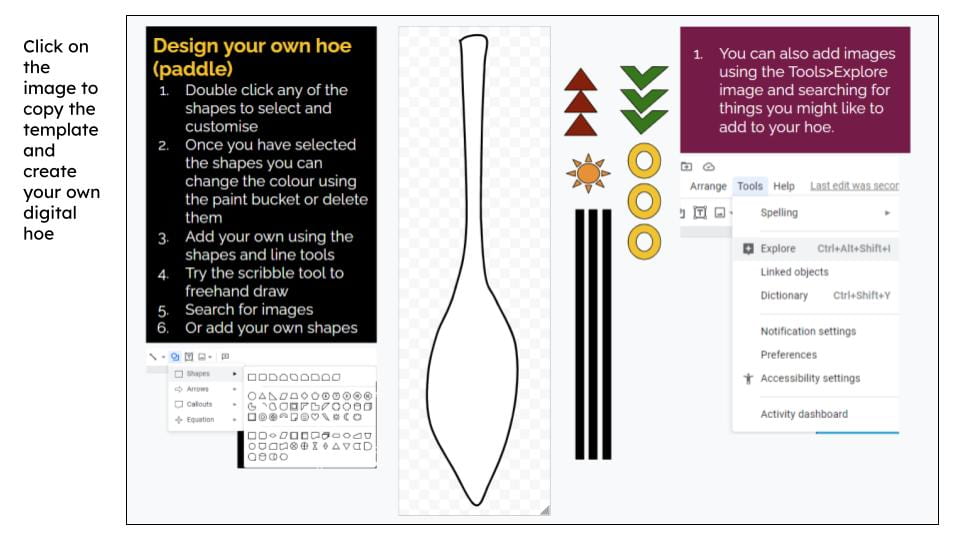
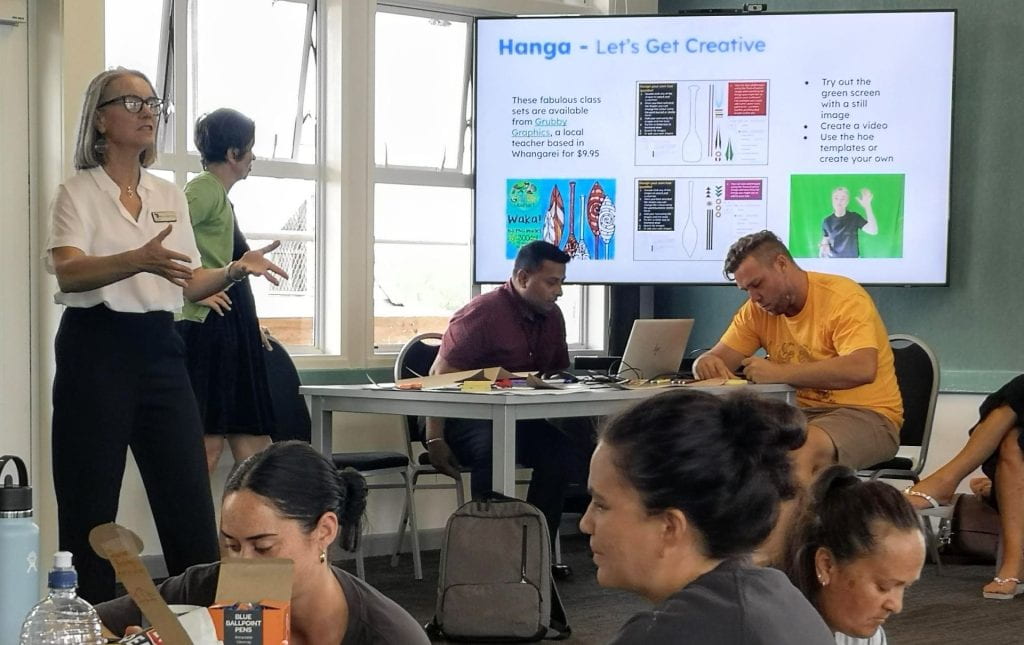
Patsy’s facilitation included a Create activity using the whakatauki, He Waka Eke Noa (working together) as our guiding philosophy.  This was a fun, hands-on activity with teachers creating their own hoe (paddle) to represent their teaching journey.  Each part of the hoe representing teachers’ professional practice. Hoe template

My role in this te ropu was to highlight Learn, Create, Share and show how teachers could turbocharge students’ learning with digital technologies using a Google Draw template and/or using the green screen.

Using the green screen meant teachers could easily remove the background when using a site like remove.bg  and then swap it the background out for something else of their choosing.

This year I really want to ramp up Create activities with my facilitation practice and show teachers how with a little ingenuity, they can provide these options for students at a reasonable cost.   The final test piece in this prototype worked out ok, but there’s plenty more for me to play with here.

We wrapped up with teacher’s sharing their reflections on the day by writing a blog post like Andrew and Kamlesh


Consolidating and refining practice

Bay of Islands College PD teamLate last year I was invited by Ruth Hills from Bay of Islands College, to be a part of a new team to support teachers’ professional development at the school. The aim of this initiative is to bring together all of the school’s facilitators from outside the school and the expertise within the school to collectively work together to aid teachers’ practice.

The group involves Nyree King from Te Āwheonui: Center for Professional Development and Learning at Te Whare Wānanga o Awanuiārangi who facilitates Culturally Responsive and Relational Pedagogy at the school, Susan Arrowsmith who has numerous strings to her bow, LPF & PaCT, Assessment for Learning to mention a few and Patsy Wynyard, the school’s Classroom Specialist Teacher and Head of Te Reo Māori.  My facilitation role brings Manaiakalani’s Learn, Create, Share pedagogy to the school

Ruth as the school’s Professional Development Leader will be leading the team.  Ruth has a lifetime of teaching experience that spans back several decades. Her embodiment of Learn, Create, Share, Culturally Responsive and Relational Pedagogy, Growth Mindset, Te Kotahitanga in and Kia Eke Panuku in the classroom is inspirational.  She’s presented at numerous Manaiakalani Secondary events on the merits of blogging at secondary school.  Click here to view Share to Learn, Empowerment through Connections.

I’m very excited to be a part of this team, and know I will learn a lot from the experience of these wonderful wāhine.

Parental partnerships as a way forward

Effective communities thrive on effective networks made up of relationships that are built on trust, respect and open communication (Harris et al. 2009; Poutaka (2009). Additionally,providing opportunities for parents to meet in non-threatening informal environments helps to seed fertile ground for more structured occasions like Academic Counselling. Schools can be instrumental towards encouraging parents to network with each other which also helps to build a supportive community where there are many common denominators Biddulph (2003). The establishment of a PTA (Parent Teachers Association) group and parent representatives at theschool could help bring people together with a common interest and for a common good.

Andrew-Power, and Goodall (2009) tell us that often parents don’t realise how important theyare to their child’s education. Raising awareness with parents about how they can help will make a considerable difference to improving their child’s attendance, attitude, behaviour and attainment Hornby and Lafaele (2011). Consequently providing regular information to parents about progress is fundamental to opening the communication lines. According to Hornby and Witte 2010; Harris, Biddulph et al. 2003 parents are often an underutilised resource. The key to get them involved is communication.

Enabling as many parents as possible to access information is an important first principle of parental engagement. If you are not communicating with parents effectively, how can they engage?
Harris, Andrew-Power, and Goodall (2009, pg.31)

Extract from a paper I wrote for my Post Graduate Diploma in E-Learning and Digital Technologies Parental Partnerships